


Startseite
/
/

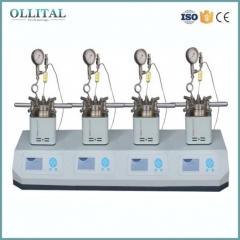
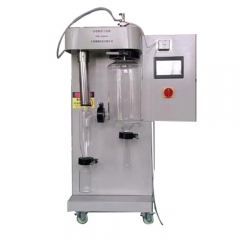
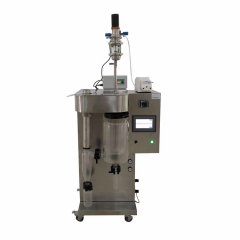
Hochwertige 1,5-Liter-Labor-Sprühtrocknerausrüstung
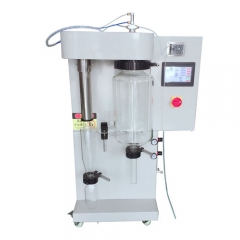
Sprühtrockner im Labormaßstab eignen sich für die Produktion von Universitäten, Forschungsinstituten und Lebensmittel- und pharmazeutischen Chemieunternehmen.
In industries such as painting, printing, electronics, and automotive parts manufacturing, organic solvents are widely used in cleaning, thinning, degreasing, and other production processes. As the number of usage cycles increases, impurities accumulate and solvent purity gradually decreases, eventually resulting in waste solvent. Waste solvent not only raises hazardous waste disposal costs but also represents a loss of recoverable solvent resources. Therefore, solvent recycling has become an important approach for enterprises to reduce production costs.
Distillation recovery is one of the more widely adopted industrial methods for treating waste solvents. Its basic principle is based on the boiling point differences among various components: by heating, the target solvent components are preferentially vaporized, and then condensed and liquefied through a condenser, achieving separation from high-boiling-point residues. In this process, the matching of distillation temperature, system vacuum level, and condensation heat exchange capacity directly affects solvent recovery rate, recovered solvent quality, and equipment operating costs.
During solvent distillation recovery, the distillation temperature is a critical process parameter that determines the vaporization rate of the feed material. The appropriateness of temperature setting directly affects the separation efficiency of the target solvent, the quality of recovered solvent, and the stability of equipment operation. Different solvent systems have different boiling point ranges, distillation characteristics, and thermal stability; therefore, the distillation temperature is not a fixed value but needs to be matched according to the physicochemical properties of the target solvent and actual process requirements.
When the distillation temperature is insufficient to meet the vaporization requirement of the target components, the volume of solvent vapor generated per unit time decreases, leading to reduced processing efficiency and extended overall recovery cycle. When the temperature is set too high, some heat-sensitive solvents or residual components may undergo thermal decomposition or oxidation side reactions, affecting the quality of recovered solvent; at the same time, high-boiling-point residues may form deposits after prolonged heating, reducing heat transfer efficiency and increasing equipment maintenance costs. Therefore, a reasonable distillation temperature needs to take into account multiple factors, including the boiling point range of the target solvent, the distillation curve of the mixture, volatility differences among components, thermal stability, and final recovery quality requirements.
In practical applications, temperature control requires a balance between evaporation efficiency, energy consumption, and solvent quality. For laboratory and industrial solvent recovery equipment, precise temperature control ensures stable distillation operation, improves recovery efficiency, and enhances batch-to-batch reproducibility. For high-boiling-point or heat-sensitive solvent systems, vacuum distillation is typically employed to lower the vaporization temperature and achieve milder separation conditions.
Vacuum degree is an important process parameter affecting solvent distillation conditions, particularly for high-boiling-point solvents and heat-sensitive material systems. In atmospheric distillation, high-boiling-point solvents typically require relatively high operating temperatures to achieve effective vaporization, but excessive temperatures may trigger thermal decomposition, oxidation, or side reactions. Therefore, reducing system pressure by establishing a vacuum environment can effectively lower the solvent vaporization temperature and improve separation conditions.
When system pressure is reduced, the boiling point of the liquid decreases accordingly, allowing the target solvent to complete vaporization and separation at lower temperatures while reducing the risk of thermal degradation. This characteristic is especially important for high-boiling-point solvents, easily oxidized solvents, and heat-sensitive compound systems.
Taking xylene as an example, its boiling point is approximately 138°C under atmospheric conditions. By reducing system pressure, the vaporization temperature of xylene can be significantly decreased, enabling the equipment to complete recovery under milder conditions, minimizing the adverse effects of high-temperature operation on solvent quality, and improving the stability of the recovered solvent.
However, a higher vacuum degree is not always better. In practice, the appropriate vacuum range should be determined based on solvent type, boiling characteristics, target throughput, evaporation rate requirements, and condenser system capacity. Excessive vacuum levels demand higher equipment sealing performance and vacuum system configuration, while also increasing equipment investment and operational complexity. In practical applications, the selection of vacuum degree requires a balance between recovery performance, equipment cost, and operational stability. For solvent systems with moderate boiling points and good thermal stability, atmospheric distillation is generally sufficient to meet recovery requirements; for high-boiling-point, heat-sensitive, or easily oxidized solvents, vacuum distillation can significantly improve separation conditions. Therefore, whether to configure a vacuum unit and which vacuum range to select should be evaluated based on the specific solvent characteristics and process objectives.
During the distillation process, after the target solvent is heated and vaporized, it needs to pass through a condenser for heat exchange and liquefaction to achieve effective recovery. If the condensing capacity is insufficient, part of the solvent vapor cannot be fully liquefied and is discharged through the exhaust end, resulting not only in solvent loss but also potentially increasing safety and environmental risks.
The heat exchange area of the condenser, the cooling medium temperature, and the circulation flow rate collectively determine the overall condensation performance. When the heat exchange area is insufficient, the solvent vapor cannot release heat adequately while passing through the condenser, leading to incomplete liquefaction. When the cooling medium temperature rises, the condensation temperature difference decreases, which similarly affects solvent recovery efficiency. Especially when operating in high-temperature environments, elevated cooling water temperatures may increase the condenser outlet temperature, making it impossible to fully recover some volatile solvents.
Different solvents have varying requirements for the condensation system due to differences in boiling point, vapor pressure, and latent heat of vaporization. Low-boiling-point, highly volatile solvents have higher vapor pressure and require stronger condensing capacity to ensure complete liquefaction; while some high-boiling-point solvents, although requiring higher temperatures for vaporization, are relatively easier to condense. Therefore, the design of the condensation system needs to be matched based on the properties of the target solvent, processing capacity, and operating conditions.
A reasonable condensation configuration typically requires comprehensive consideration of solvent boiling point, evaporation rate per unit time, and site cooling conditions. For highly volatile solvents or larger processing capacities, approaches such as increasing heat exchange area, employing two-stage condensation, or using low-temperature cooling media can be adopted to improve solvent vapor capture capability. By optimizing the condensation system design, solvent loss can be reduced, overall recovery rate improved, and long-term stable operation of the equipment ensured.
Distillation temperature, system vacuum degree, and condensation efficiency do not function independently. In the solvent recovery process, they are interrelated and collectively determine the final recovery rate, solvent quality, and operational economy of the equipment.
Atmospheric distillation is suitable for solvent systems with moderate boiling points and good thermal stability, offering simple equipment structure and relatively low investment cost. Under such conditions, the distillation temperature can be set directly based on the solvent boiling point range, and standard condensation configuration is sufficient to meet recovery requirements. For high-boiling-point or heat-sensitive materials, vacuum distillation reduces system pressure, allowing the solvent to vaporize at lower temperatures and minimizing the impact of high temperatures on material quality. However, when system pressure is reduced, the volumetric flow rate of solvent vapor increases accordingly, imposing higher demands on the condenser's heat exchange area and cooling capacity. For low-boiling-point or highly volatile solvent systems, special attention should be given to the capture capacity of the condensation system. If the heat exchange area is insufficient or cooling conditions cannot meet the requirements, part of the solvent vapor may not be fully liquefied, resulting in a decrease in the actual recovery rate.
The matching of these three parameters needs to be comprehensively balanced based on solvent properties and process objectives. If only distillation temperature is considered while condensation capacity is neglected, the increase in vapor generation may not translate into higher recovery; if excessive vacuum is pursued without correspondingly enhancing condensation configuration, the recovery performance may be compromised due to insufficient condensation capacity. Therefore, when configuring equipment or adjusting processes, temperature setting, vacuum level selection, and condenser heat exchange capability need to be considered as an integrated system, rather than optimizing any single parameter in isolation.
In practical engineering applications, the basic distillation conditions are typically determined based on the target solvent type and processing capacity, which then serve as the basis for matching the condenser's heat exchange area, cooling medium parameters, and vacuum system configuration. The synergistic matching of temperature, vacuum degree, and condensation capacity is the foundation for balancing recovery quality, recovery rate, and operational stability. When properly coordinated, they enable both high recovery rates and stable operation while ensuring recovery quality. For specific solvent systems, the combination of these three parameters can be further optimized based on experimental data or process simulation results.
After determining the appropriate distillation conditions, solvent recovery equipment configuration should be selected according to solvent characteristics, processing requirements, and actual operating conditions. Different solvent systems require different configurations in terms of explosion protection, heating method, processing capacity, temperature control, and condensation performance.
Most organic solvents are flammable and potentially hazardous media. Therefore, solvent recovery equipment should be designed according to applicable explosion-proof requirements, such as the GB3836 series standards (Chinese national standard for explosion-proof equipment) . The specific protection level should be selected based on the hazardous area classification and site safety requirements.
Thermal oil indirect heating is commonly used in industrial solvent recovery systems. By circulating heat transfer oil through the jacket surrounding the distillation vessel, the system provides uniform heating and reduces the risk of localized overheating, solvent degradation, or residue formation. Compared with direct electric heating, indirect heating provides better temperature uniformity and operational safety for continuous solvent recovery applications.
The equipment working volume should be selected according to daily waste solvent generation, batch processing requirements, and operating frequency. Oversized equipment may operate inefficiently under low-load conditions, while undersized equipment can increase processing cycles and manual operation requirements.
A precise temperature control system equipped with PID regulation, multi-stage temperature programming, and over-temperature protection helps maintain stable distillation conditions and improves recovery consistency across different solvent systems.
The condenser design should match the solvent boiling point, volatility, vapor generation rate, and cooling conditions. For high-volatility solvents or demanding recovery processes, larger heat exchange areas, two-stage condensation, or chilled water cooling may be required to improve vapor capture efficiency and ensure complete solvent liquefaction.
The effectiveness of solvent distillation recovery is not determined by any single operating parameter, but rather by the coordinated matching of the entire recovery system. Proper selection of distillation temperature, vacuum conditions, condensation capacity, and equipment configuration forms the foundation for achieving high recovery efficiency, stable operation, and consistent solvent quality.
Different solvent systems vary significantly in evaporation characteristics, thermal stability, volatility, and process requirements. Therefore, equipment selection should be based on actual process conditions rather than focusing solely on capacity or standard configurations. In practice, factors such as solvent composition, daily waste volume, operating temperature, vacuum requirements, and site utility conditions all influence the final equipment configuration.
Given the differences among solvent systems, there is no universal standard solution. The appropriate configuration needs to be determined based on the specific material characteristics and actual operating conditions.



 +86 15960821529
 kevin@ollital.comkevinollital@gmail.com
 +86 15960821529
 +8615960821529