
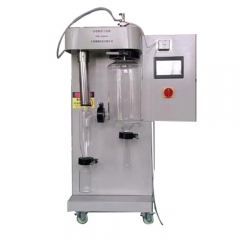
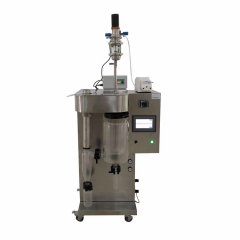
Hochwertige 1,5-Liter-Labor-Sprühtrocknerausrüstung
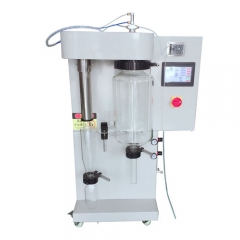
Sprühtrockner im Labormaßstab eignen sich für die Produktion von Universitäten, Forschungsinstituten und Lebensmittel- und pharmazeutischen Chemieunternehmen.
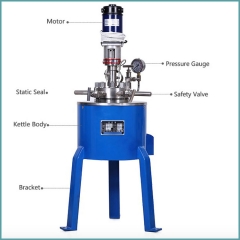
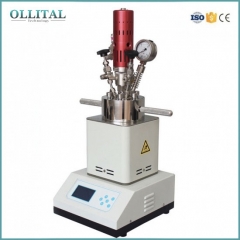
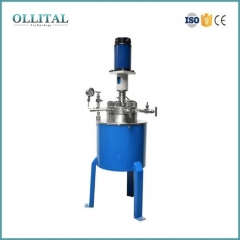
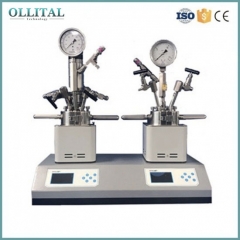
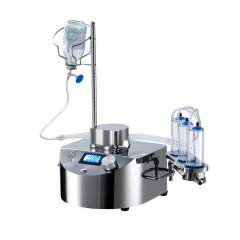
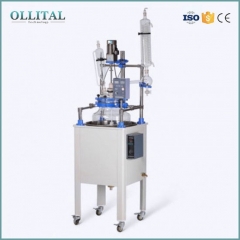
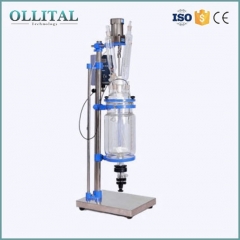
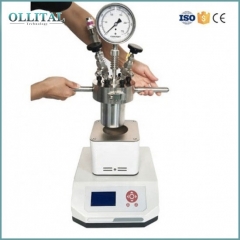
In numerous industrial sectors—such as chemical manufacturing, advanced materials, and food processing—the reactor holds a central position. If an entire production line were likened to the human body, the reactor would undoubtedly be the "heart" driving the production process. The vast majority of chemical, synthesis, polymerization, and extraction reactions take place within these vessels. Depending on specific production requirements, reactors can vary in terms of materials, capacity, agitation methods, heating systems, and pressure ratings. Consequently, selecting the right reactor is crucial for enhancing production efficiency, ensuring product quality, and reducing operating costs.
The operational process of a reaction vessel primarily involves raw material charging, agitation and mixing, heating or cooling, the reaction itself, and discharging. First, raw materials—such as liquids and powders—are loaded into the vessel according to the production formula, with mixing ratios controlled via metering or automated feeding systems. Next, the agitation system is activated to ensure thorough mixing, utilizing an agitator selected based on the material's specific properties. During the reaction phase, heating or cooling is managed through a jacket or internal coils, with precise temperature control; once temperature, pressure, and agitation speed reach the set parameters, the materials undergo the required chemical or physical reactions, with real-time monitoring of variables such as pH, pressure, and liquid level performed as necessary. Upon completion of the reaction, the finished product is discharged or transferred to the next stage of the process in accordance with operational requirements.
As highly versatile, custom-engineered core equipment, reaction kettles are utilized across virtually all sectors of fine industrial production. Key application areas include:
Chemical Industry: Resin synthesis, coatings and inks, adhesives, additives, organic solvent synthesis, and acid-base neutralization reactions.
Biotechnology Industry: Biosynthesis of raw materials, liquid extraction, concentration, crystallization, and aseptic reactions; requires exceptional equipment sealing and cleanliness.
Food and Personal Care Industries: Mixing, emulsification, and reaction/formulation of skincare products, shampoos, sauces, dairy products, and food additives.
New Energy Industry: High-pressure synthesis and refining of lithium battery electrolytes, cathode materials, and photovoltaic materials.
Advanced Materials Industry: Polymerization and modification reactions for polymer materials, composite materials, and nanomaterials.
Spanning core industrial sectors such as basic chemicals, new energy, and advanced materials, reaction vessels have become indispensable equipment in modern fine manufacturing, thanks to their exceptional adaptability to diverse operating conditions and their ability to offer high-precision process control. Far more than simple containers for chemical reactions, they are pivotal to controlling manufacturing processes, ensuring consistent product quality, maintaining workshop safety, and boosting overall productivity—serving as the cornerstone of a stable production line.
For manufacturers, selecting the right reaction vessel—precisely matched to specific process requirements and operating conditions—and pairing it with standardized, routine maintenance, can stabilize product quality at the source. This approach significantly reduces the likelihood of equipment downtime due to failure, effectively cuts production and maintenance costs, and ensures the efficient, safe, and long-term operation of the production line.
This article provides a comprehensive breakdown of reaction container structures, classifications, applications, and maintenance techniques. If you have any questions or require customized solutions regarding equipment selection, daily operation, maintenance, or troubleshooting, please feel free to leave a comment and join the discussion!



 +86 15960821529
 kevin@ollital.comkevinollital@gmail.com
 +86 15960821529
 +8615960821529


