


Startseite
/
/

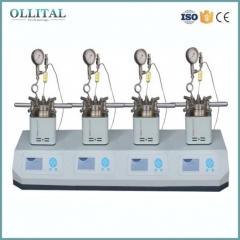
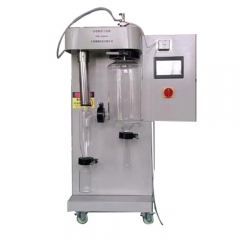
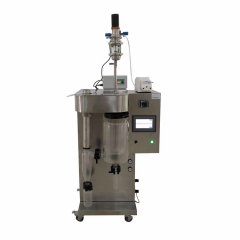
High quality 1.5L scale lab spray dryer equipment
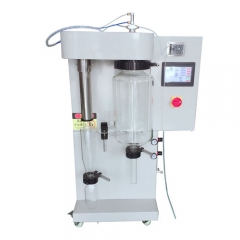
Lab scale spray dryer is suitable for the production of in universities, research institutes and food and pharmaceutical chemical enterprises.
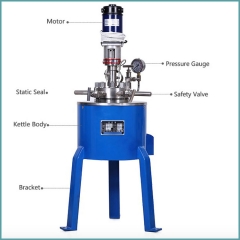
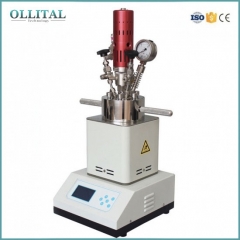
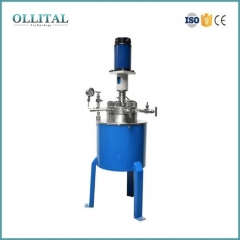
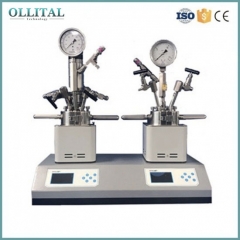
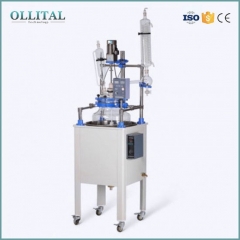
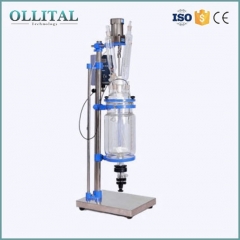
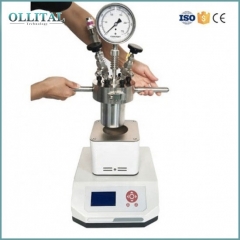
For laboratory reactions, a lab high pressure reactor is often used for hydrothermal synthesis, catalytic hydrogenation, polymerization, and material crystallization, where a consistent temperature profile is critical for repeatable results.
For a small high-pressure reactor, temperature control involves more than reaching a setpoint. Heating rate, heat transfer efficiency, temperature uniformity, stability during holding, and cooling rate all affect the actual conditions inside the vessel. The choice of heating and cooling configuration should be treated as part of the reactor system design, not as an afterthought.
Temperature directly influences reaction rate, conversion, and selectivity. A common misconception is that the setpoint displayed on the controller represents the actual reaction temperature. What matters is whether the reaction medium itself reaches and maintains the target. The difference between displayed value and actual material temperature can be affected by heat-transfer path, stirring efficiency, sensor location, and system thermal load.
During heating, the reactor wall may reach setpoint well before the bulk liquid does. If the sensor is near the wall or in a poorly mixed zone, the controller may indicate target temperature while most of the mixture is still below it. This can lead to incomplete reactions or inconsistent results across batches. Heating rate also affects reproducibility—too rapid a ramp may cause overshoot near setpoint, and even a brief overshoot can alter kinetics and product quality.
Once the target temperature is reached, temperature stability becomes the priority during holding. If the system fluctuates due to controller tuning or thermal load changes, reaction conditions are not truly constant, which reduces data comparability in screening or optimization experiments. Cooling is equally part of temperature control: in some reactions, cooling rate affects crystallization, phase separation, or reaction termination, and in high-pressure systems, cooling also affects internal pressure. The cooling method should be selected based on process requirements—natural cooling may suffice for simple applications, but controlled cooling via coil or jacketed circulation is often necessary for defined temperature profiles.
Electric heating uses resistance elements to heat the reactor body directly, with heat passing through the vessel wall into the reaction medium. This offers fast thermal response and is suited to applications where heating and holding are the main requirements. However, heating power must be matched to reactor volume. Oversized heaters may reduce heating time but increase overshoot risk, and actual heat transfer also depends on stirring, viscosity, and medium thermal conductivity.
Electric heating is often combined with a cooling coil. The electric heater handles temperature rise and holding, while the coil provides active cooling when needed. Jacketed heating transfers heat through a circulating fluid in the reactor jacket, with an external unit heating the fluid before it enters the jacket. Compared with electric heating, jacketed heating provides more uniform heat transfer, and the same loop can be used for cooling by switching the external unit to cooling mode. This suits processes that need both controlled heating and defined cooling. Performance depends on circulator capacity, flow rate, fluid properties, and heat transfer area. When paired with a heating and cooling circulator, the circulator provides both heating and cooling through the same fluid loop, making a separate electric heating system unnecessary. This approach is particularly effective for a high pressure and high temperature reactor, where stable thermal response under demanding conditions is essential for process consistency.
Natural cooling relies on heat dissipation after heating stops. It is simple but difficult to control precisely, as the cooling rate depends on the temperature difference with the environment. Cooling coils provide a more direct heat removal path: a cooling medium flows through a coil in the reactor, absorbing heat and increasing cooling rate. Actual performance depends on cooling medium temperature and flow rate, coil surface area, and reactor thermal load.
Jacketed cooling uses the same circulation loop as jacketed heating. A cooled heat-transfer fluid is pumped through the jacket, removing heat through the reactor wall. This provides better control over cooling rate than natural cooling or simple coil arrangements, and allows transitions from heating to holding to cooling without changing configuration.
For processes involving both heating and active cooling, a heating and cooling circulator provides an integrated solution. It heats or cools a circulating fluid and delivers it to the reactor jacket. The system heats the fluid for temperature rise, maintains it during holding, and cools it for active cooling, avoiding manual switching between separate systems.
Final performance depends on control algorithm, sensor accuracy, flow rate, heat transfer area, fluid properties, and system thermal load. When evaluating such systems, consider not only temperature range but also temperature stability, heating rate, cooling rate, and heat-transfer efficiency under actual conditions. For programmed temperature profiles, the combination of a jacketed reactor and a heating and cooling circulator is a practical choice for many laboratory applications.
The hardware determines how heat enters and leaves the reactor, but the control system determines when and how much heat is transferred. Temperature sensors provide feedback—typically installed inside the vessel, though the measured value may not fully represent the entire reactor contents depending on sensor placement, stirring, and medium thermal conductivity.
Most laboratory systems use PID regulation to adjust heating or cooling output based on the difference between setpoint and measured temperature. Aggressive tuning may reach setpoint quickly but overshoot; conservative tuning may take longer but maintain stability with less fluctuation. Thermal inertia also affects performance: the vessel, fluid, and medium all store and release heat, so even after heating stops, temperature may continue to rise due to stored heat.
Temperature control is not about reaching a single value but managing the entire profile—heating rate, stability during holding, and cooling rate. Two reactors may both reach 220°C, but if one overshoots and fluctuates while the other maintains stable control, results will differ. For research or process development, a stable and repeatable profile is often more important than a higher maximum temperature.
For a small high-pressure reactor, the temperature control configuration should match experimental requirements. Start with working volume, working temperature range, and operating pressure, then consider required heating rate, cooling rate, and temperature stability.
For experiments with programmed temperature changes or frequent cycling, a jacketed reactor with a heating and cooling circulator is typically more suitable for a stirred high pressure reactor setup. If the process is primarily heating and holding with limited cooling needs, electric heating with a cooling coil provides a simpler configuration for a lab autoclave reactor. The properties of the reaction medium also matter—viscosity, specific heat capacity, thermal conductivity, and corrosivity affect heat transfer and temperature response—and should be considered together with volume, temperature range, and heating and cooling requirements.
For a small lab autoclave reactor, temperature control extends beyond reaching a setpoint. The heating method, cooling arrangement, heat transfer path, and control response all contribute to the actual temperature profile. When selecting a reactor, consider working temperature range together with heating rate, temperature stability, and cooling capability. A properly matched reactor and temperature control system provides more stable and reproducible experimental conditions.



 +86 15960821529
 kevin@ollital.comkevinollital@gmail.com
 +86 15960821529
 +8615960821529