

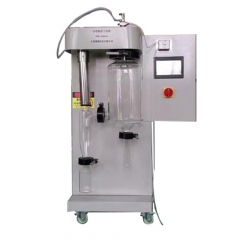
High quality 1.5L scale lab spray dryer equipment
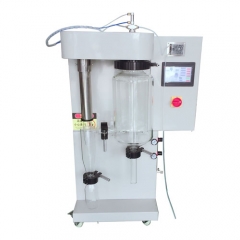
Lab scale spray dryer is suitable for the production of in universities, research institutes and food and pharmaceutical chemical enterprises.







Dry ice is widely used in industrial cleaning, cold chain transportation, food preservation, and other temperature-sensitive applications. However, choosing the right form of dry ice is not simply a matter of preference. Pellets and blocks behave differently during handling, storage, and use, so the most suitable option depends on how the dry ice will be consumed.
For companies planning to purchase dry ice regularly or establish their own production facilities, choosing the right form of dry ice also affects the selection of a suitable dry ice machine, production capacity, and operating costs. So, should you choose dry ice pellets or blocks? The answer starts with understanding your actual application.
The first question to consider is not which form is easier to produce, but what the dry ice needs to do.
For dry ice blasting, pellets are generally the more practical form because they can be supplied to compatible blasting equipment as the cleaning medium. Pellet diameter is an important consideration, as the cleaning machine's feeding system and nozzle configuration determine which particle sizes can be used.
Different cleaning jobs call for different dry ice pellet sizes. 3 mm pellets are the most common. Before picking a pelletizer, double-check what dry ice specs your cleaning machine maker recommends.
For businesses providing industrial cleaning services, pellet production can help supply dry ice according to daily cleaning demand. It is particularly worth considering when dry ice is consumed directly during cleaning operations.
For cold chain transportation, refrigerated packaging, and product preservation, dry ice blocks may be more suitable when a larger, solid form is needed.
The size and thickness of the block should match the available packaging space and the required cooling arrangement. Rather than choosing the largest block available, consider how it will fit into the container and how the dry ice will be distributed around the products.
For applications involving long-distance transportation, the required holding time and packaging insulation should also be considered.
Cleaning applications typically use pellets compatible with the blasting system, while transportation and preservation applications often rely on dry ice blocks that meet packaging and cooling requirements.
The amount of dry ice consumed is another important factor when choosing a production method.
A company providing dry ice cleaning services may consume dry ice continuously during working hours. Its demand can vary depending on the number of cleaning jobs, operating hours, and the type of surfaces being cleaned.
In comparison, a cold chain supplier may need to prepare a certain quantity of dry ice before each shipment. Demand may be concentrated around packaging and dispatch schedules rather than continuous consumption.
Before purchasing production equipment, estimate the actual daily requirement. A simple calculation is: Daily dry ice requirement = Average hourly consumption × Operating hours per day. For example, if a business uses an average of 50 kg of dry ice per hour and operates for 6 hours per day, its estimated daily requirement is 300 kg.
This is only a starting estimate. Actual production planning should also account for storage losses, packaging time, production interruptions, and fluctuations in demand.
It is also important to distinguish between machine output and usable dry ice. A machine's rated production capacity does not automatically equal the amount of dry ice available for final use. The production schedule and handling process should be considered together.
Dry ice gradually sublimates, changing directly from a solid into carbon dioxide gas. Therefore, storage and transportation conditions can affect how much dry ice remains available when it reaches the point of use.
Both pellets and blocks need suitable insulated storage. However, the form of dry ice can influence how it is handled and packed. Pellets are convenient for feeding compatible cleaning equipment and preparing smaller quantities for use. However, their relatively small size means that handling and storage arrangements need to minimize unnecessary exposure during transfer. Blocks can be convenient for applications that require larger solid pieces. Their dimensions can be selected according to the available storage containers or packaging space.
When planning storage and transportation, consider:
· Storage capacity: How much dry ice needs to be stored at one time?
· Packaging method: Does the packaging accommodate pellets or blocks more effectively?
· Handling frequency: How often will dry ice be transferred between storage, packaging, and the final application?
· Transportation distance: How long will the dry ice remain in transit before use?
· Sublimation loss: How can exposure to the surrounding environment be reduced?
Ultimately, dry ice sublimation loss is affected by packaging design, insulation performance, storage length and how the dry ice is handled.
Once the application and consumption requirements are clear, you can start selecting a suitable dry ice making machine. The choice between a pelletizer and a block machine should be based on the required dry ice form and production needs.
A dry ice pelletizer and a dry ice block machine are designed to produce different forms of dry ice. The choice should follow the product requirements rather than the machine's rated capacity alone.
A dry ice pelletizer is worth considering when your business mainly supplies dry ice for industrial cleaning, or when customers require dry ice in particle or cylindrical forms.
Before choosing a model, please check:
· Required pellet diameter
· Expected hourly and daily production
· Operating hours and production frequency
· Compatibility with downstream cleaning equipment
· Available space and production conditions
Ollital dry ice pelletizers can produce dry ice pellets in diameters from 3 mm to 19 mm, with production capacities ranging from approximately 50 kg/h to over 1,000 kg/h across the product range. The appropriate model depends on the required output and pellet specifications.
A dry ice block machine is more appropriate when your business needs larger solid dry ice pieces for cold chain transportation, preservation, or other applications that require a specific block size.
Important factors include:
· Required block length, width, and thickness
· Daily production demand
· Packaging dimensions
· Storage and transportation arrangements
· Whether customized block specifications are needed
Ollital's dry ice block machines cover commonly used block thicknesses from 10 mm to 210 mm. Different models are available for different block dimensions and production requirements.
The block size should be determined by the final application. A block that is too large may not fit the packaging, while a block that is too small may not suit the intended handling or cooling arrangement.
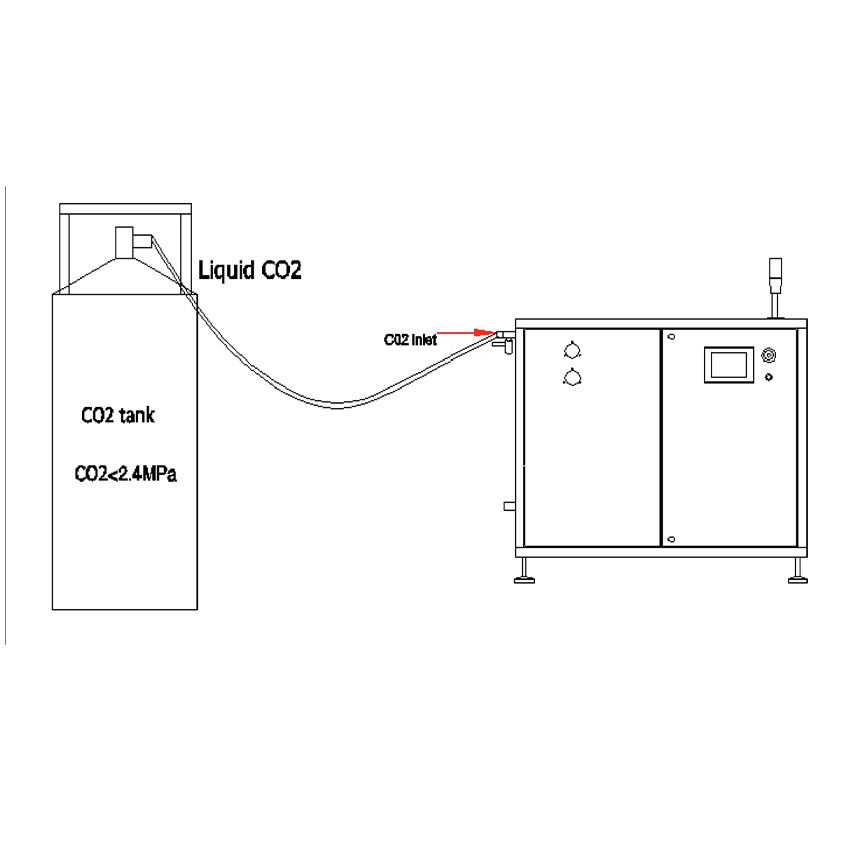
Choosing a suitable dry ice production machine is only one part of establishing a reliable production operation. The entire process, from liquid CO₂ supply to dry ice collection, storage, and packaging, should also be considered.
The production process also involves liquid CO₂ supply, dry ice forming, collection, storage, packaging, and delivery. Each stage should be considered before equipment is purchased.
For example, a company producing pellets for its own cleaning services may prioritize a production capacity that matches its daily cleaning schedule. A supplier serving cold chain customers may need to pay more attention to block dimensions, packaging arrangements, and delivery frequency.
It is also worth considering whether demand is expected to increase. Purchasing equipment based only on current consumption may limit future production, while choosing a machine that is much larger than necessary may increase the initial investment without providing an immediate benefit.
A practical selection process should therefore consider both current demand and realistic future growth.
The following examples can help clarify the decision:
· Industrial cleaning service provider: A dry ice pelletizer is generally the more suitable starting point, provided its pellet specifications match the cleaning equipment.
· Cold chain packaging and transportation company: A dry ice block machine may be a better choice when the packaging process requires blocks of specific dimensions.
· Dry ice supplier serving different industries: The decision should be based on the actual product requirements of its customers. If there is sufficient demand for both forms, separate production equipment may be worth evaluating.
· Business starting its own dry ice production: Begin with the target market, estimated daily demand, and required dry ice specifications before deciding which machine to purchase.
The most suitable equipment is not necessarily the one with the highest production capacity. It is the one that produces the required form of dry ice at a capacity that matches your business operation.
Choosing between dry ice pellets and blocks requires more than comparing their physical shapes. Industrial cleaning, cold chain transportation, storage, packaging, and daily consumption all influence which form is more practical.
If your business mainly uses dry ice for blasting and cleaning, a pelletizer is generally worth considering. If your operation requires larger solid pieces for packaging and temperature control, a block machine may be the better option.
Before investing in production equipment, define your application, estimate your daily demand, and confirm the required dry ice dimensions. These details will help you select a machine that fits your actual production needs.
Ollital offers dry ice pelletizers and dry ice block machines for different production requirements. Share your intended application, required dry ice specifications, and estimated production capacity with us. We can help you evaluate a suitable machine configuration for your business.
Dry ice pellets are generally more suitable for dry ice blasting because compatible cleaning equipment uses pellets as the cleaning medium. The required pellet diameter should be confirmed with the cleaning machine manufacturer.
Blocks can be a practical option when larger solid pieces are needed for insulated packaging and temperature control. The appropriate block dimensions depend on the packaging design, required cooling arrangement, and transportation conditions.
The right pellet size depends on the application and the equipment using the dry ice. For dry ice blasting, always check the particle-size requirements of the blasting machine before selecting a pelletizer.
Start with the average hourly dry ice consumption and the number of operating hours per day. Then consider storage losses, packaging time, production interruptions, and potential changes in demand to determine the required machine capacity.
Production efficiency is influenced by several factors, including the condition and supply pressure of liquid CO₂, machine design, operating conditions, and the stability of the production process.
Proper equipment selection and stable operating conditions help reduce unnecessary material losses and improve the consistency of dry ice production. When evaluating a machine, consider both its hourly output and its liquid CO₂consumption.



 +86 15960821529
 kevin@ollital.comkevinollital@gmail.com
 +86 15960821529
 +8615960821529


