


Startseite
/
/


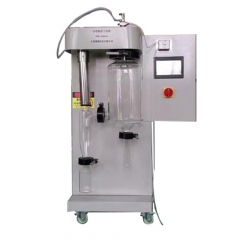
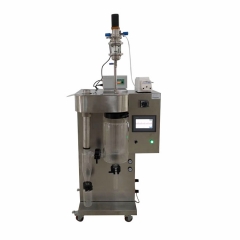
High quality 1.5L scale lab spray dryer equipment
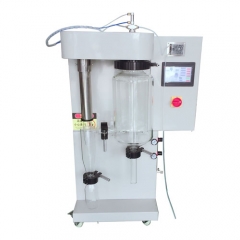
Lab scale spray dryer is suitable for the production of in universities, research institutes and food and pharmaceutical chemical enterprises.
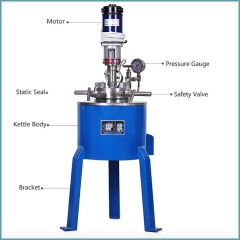
Open-roll mill (also known as an open two-roll mill or rubber mixing mill) is a primary piece of equipment used in rubber and plastic processing. It consists of two horizontally positioned, counter-rotating rolls that operate at different speeds, and is used for the mastication, compounding, and sheeting of polymer compounds.
As an "open" system—distinct from internal mixers (such as Banbury mixers) that process materials within a sealed chamber—the open-roll mill is widely used for the mastication of raw rubber, the incorporation of additives into masterbatches, final-stage mixing, and the production of smooth rubber sheets. Due to its open design, it is also the preferred equipment for laboratory-scale formulation testing and small-batch prototyping.
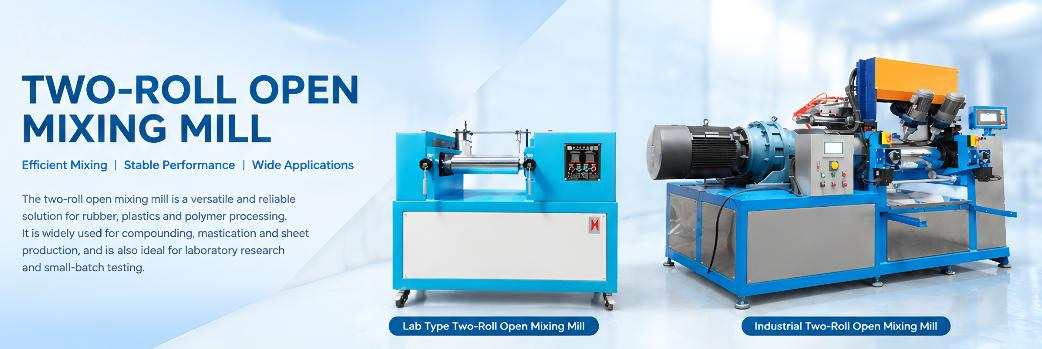
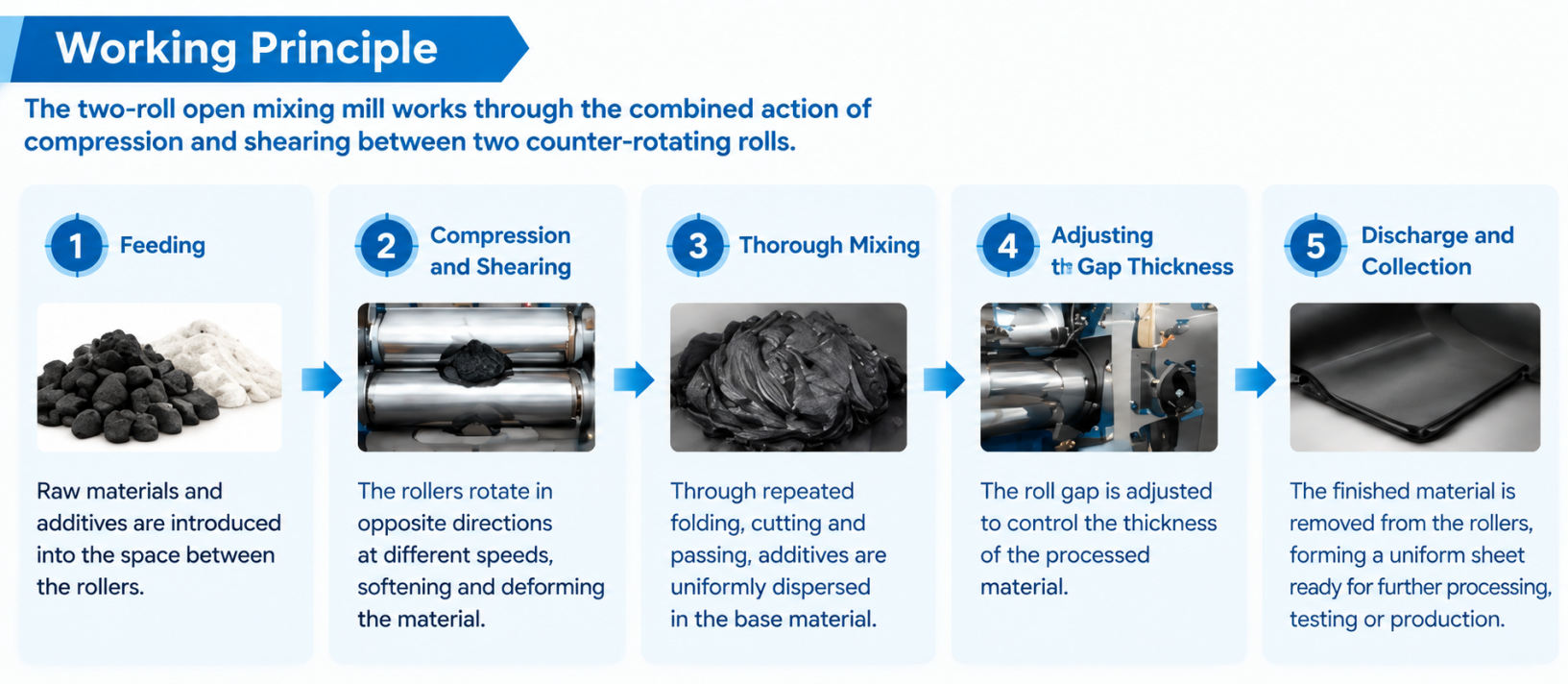
The operating process of Two-Roll Open Mixing Mill mixer consists of the following main steps: 1. Feeding: Raw materials—such as natural rubber, synthetic rubber, silicone, or plastics—along with the necessary fillers and additives, are introduced into the space between two rollers. 2. Compression and Shearing: The two rollers rotate in opposite directions at different speeds; as the material passes through the gap between them, it undergoes compression and shearing, causing it to soften and undergo plastic deformation. 3. Thorough Mixing: Through repeated folding, cutting, and passing the material back through the roller gap, the various additives are uniformly dispersed within the base material, ensuring an effective mixture. 4. Adjusting Discharge Thickness: The gap between the two rollers is adjusted according to specific production requirements to control the thickness of the processed material. 5. Discharge and Collection: Once mixing is complete, the material is removed from the rollers, resulting in a uniform sheet that is ready for subsequent processing, performance testing, or manufacturing.
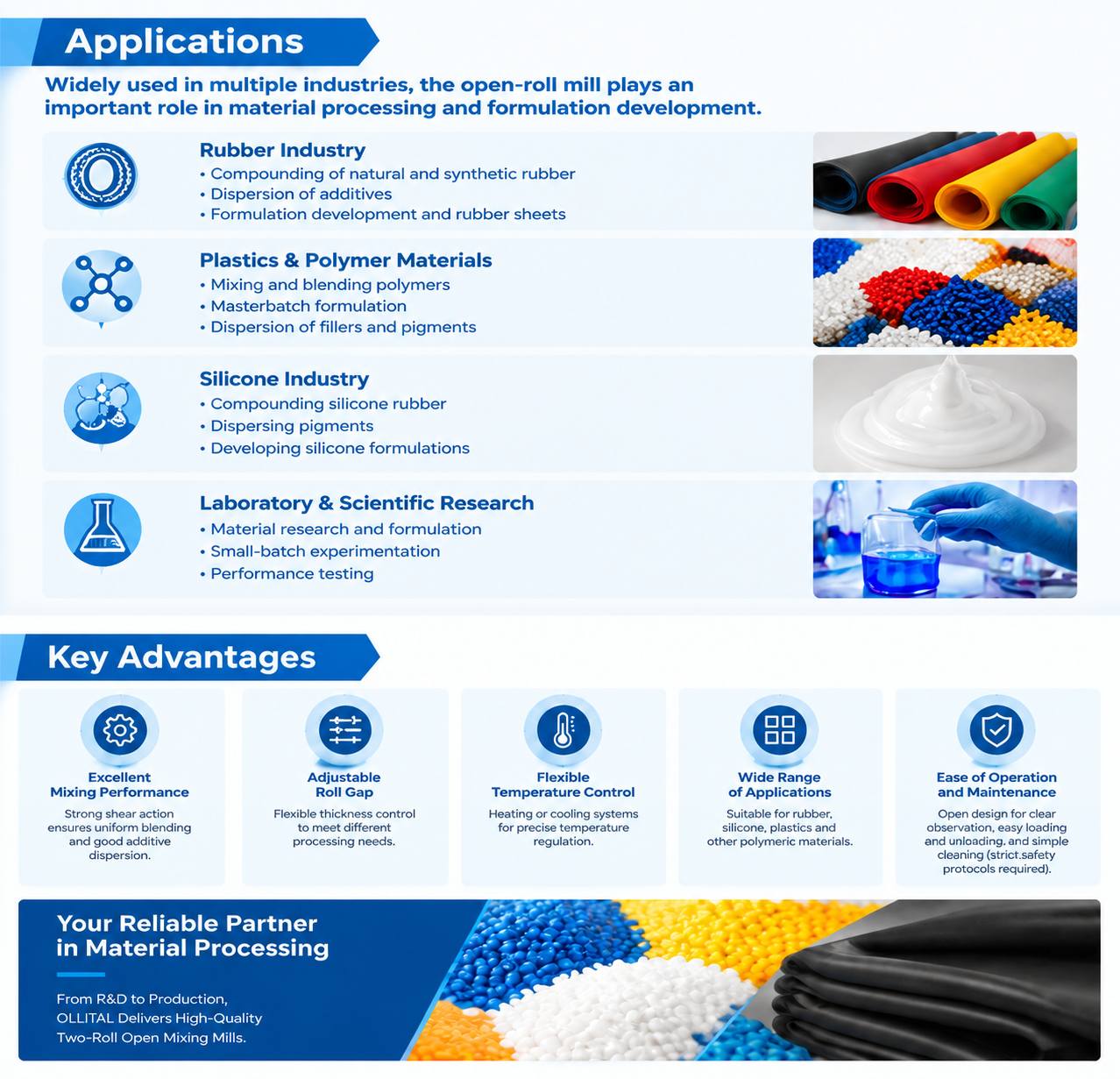
1. Rubber Industry: Open-roll mills are commonly used for compounding during rubber processing, including the compounding of natural and synthetic rubber, the dispersion of rubber additives, the development of rubber formulations, and the preparation of rubber sheets.
2. Plastics and Polymer Materials Industry: In this sector, open-roll mills are used for mixing plastic materials, blending polymers, developing masterbatch formulations, dispersing fillers and pigments, and testing polymer properties.
3. Silicone Industry: These mills are suitable for processing various types of silicone materials, such as compounding silicone rubber, dispersing pigments in silicone, developing silicone formulations, and preparing silicone composite materials.
4. Laboratory and Scientific Research: Laboratory-scale open-roll mills are frequently used for material research, formulation development, and small-batch experimentation—including the R&D of new rubber materials, the study of polymer properties, the preparation of small-batch samples, the optimization of compounding processes, and material quality testing.
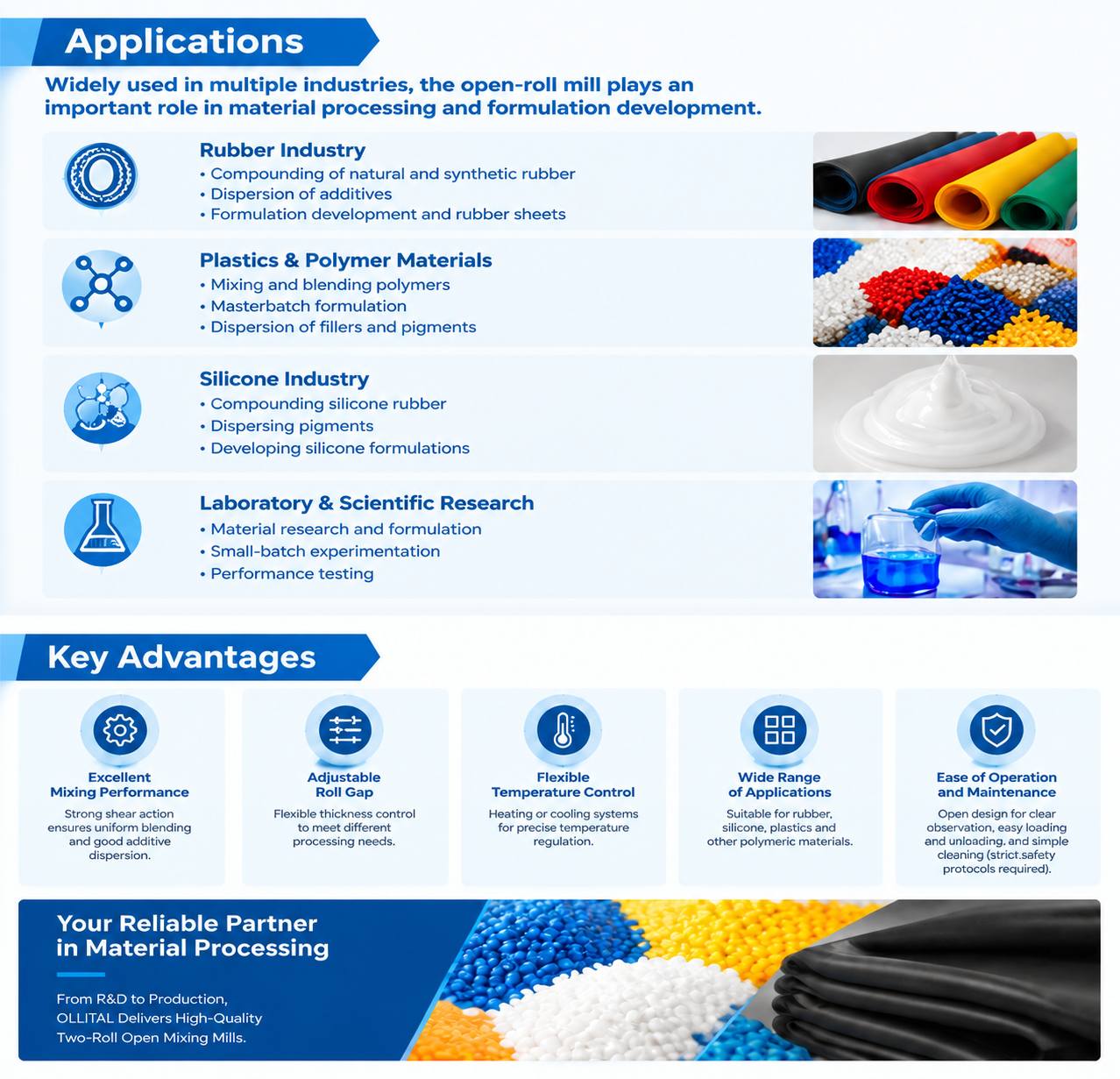
1. Excellent mixing performance: The speed differential between the two rollers generates a shearing action, which enhances the uniformity of material blending and the dispersion of additives.
2. Adjustable roll gap: The clearance between the rollers can be modified to suit the processing requirements of different materials, accommodating various thicknesses and specific mixing processes.
3. Flexible temperature control: Depending on the equipment configuration, heating or cooling systems can be employed to regulate the temperature during the mixing process.
4. Broad range of applications: Suitable for processing rubber, silicone, plastics, and a wide variety of other polymeric materials.
5. Ease of operation and maintenance: The open design allows for clear observation of the material during mixing, as well as convenient loading, unloading, and routine cleaning; however, strict adherence to equipment safety protocols is mandatory during operation.
Before purchasing an open-roll mill, it is essential to conduct a comprehensive evaluation based on material characteristics, production scale, and specific process requirements. First, roll dimensions—diameter and working length—are critical selection criteria, as they define the equipment's effective processing area; these should be chosen according to the needs of laboratory R&D or industrial-scale production. Second, roll rotational speed and speed ratio directly influence the shear action and mixing efficiency; therefore, equipment with adjustable speed is recommended to accommodate the processing requirements of various materials. Furthermore, temperature control is a key consideration; for temperature-sensitive materials, the equipment should be equipped with heating, cooling, and precise temperature control systems tailored to the specific process. Regarding the material of the rolls, the choice of base material and surface treatment should be based on the properties of the materials being processed, ensuring excellent wear resistance and suitability. Finally, safety features must not be overlooked. Since open-roll mills pose risks of crushing or entanglement during operation, it is vital to prioritize the inclusion of emergency stop mechanisms, safety guards, and other necessary protective measures to ensure safe and stable operation.



 +86 15960821529
 kevin@ollital.comkevinollital@gmail.com
 +86 15960821529
 +8615960821529