


Startseite
/
/


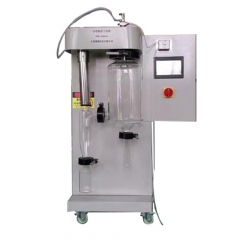
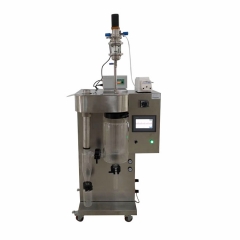
High quality 1.5L scale lab spray dryer equipment
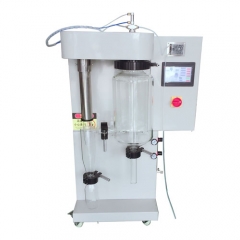
Lab scale spray dryer is suitable for the production of in universities, research institutes and food and pharmaceutical chemical enterprises.
Dry ice is widely used in industrial cleaning, food processing, pharmaceutical transportation, cold-chain logistics, and other applications requiring low-temperature cooling. Unlike ordinary ice, dry ice is solid carbon dioxide (CO₂). Under normal atmospheric pressure, it changes directly from a solid into a gas without passing through a liquid state. This process is known as sublimation.
For businesses planning to produce dry ice on-site, purchasing a dry ice machine is only one part of the preparation. A complete production setup also requires a reliable liquid CO₂ supply and storage system, a suitable dry ice production machine, and insulated storage containers for the finished product.
Each component plays a different role in the production process. Understanding how they work together helps businesses select compatible equipment, maintain a stable raw-material supply, and reduce unnecessary dry ice loss.
The first requirement for dry ice production is a reliable supply of liquid carbon dioxide.
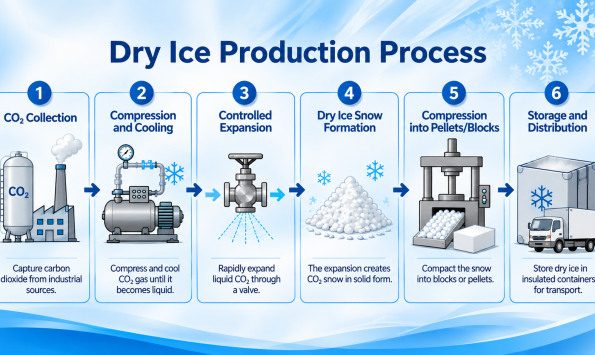
Dry ice is produced by expanding liquid CO₂ under controlled conditions. When liquid CO₂ enters the production system and experiences a rapid pressure reduction, part of it turns into gas while another portion forms fine solid CO₂ particles, commonly called dry ice snow.
This dry ice snow is then collected and compressed into the required shape by the production machine.
Since liquid CO₂ is the raw material used in this process, its supply condition directly affects production. Businesses should consider not only the amount of liquid CO₂ available but also its storage pressure, storage conditions, and delivery capacity.
Liquid CO₂ must be stored in equipment specifically designed for its temperature and pressure conditions. The storage container is an important part of a dry ice production system because it affects how reliably liquid CO₂ can be supplied to the machine.
A dry ice making machine requires liquid CO₂ as its raw material. If the pressure inside a storage container becomes too low, the liquid CO₂ may not remain in a suitable condition for stable liquid supply. Part of the liquid may vaporize, reducing the amount of liquid CO₂ available for the production process.
This can directly affect production output. When less liquid CO₂ is supplied to the machine, the amount of dry ice that can be produced may also decrease.
For reliable operation, Ollital recommends maintaining the liquid CO₂ storage pressure at no less than 2 MPa under the applicable operating conditions. The actual operating pressure should always be confirmed according to the storage vessel design and the equipment manufacturer's requirements.
To reduce unnecessary CO₂ loss and maintain a more stable liquid supply, Ollital generally recommends vacuum-insulated Dewar cylinders or larger dedicated liquid CO₂ storage tanks.
These containers feature a vacuum-insulated structure that reduces heat transfer from the external environment. By helping maintain the required low-temperature storage conditions, they are better suited to storing liquid CO₂ for dry ice production.
In comparison, conventional steel cylinders without an appropriate vacuum-insulated structure may experience greater heat transfer during storage and use. This can increase the likelihood of liquid CO₂ vaporization and reduce the amount of liquid available for dry ice production.
The choice between a Dewar cylinder and a larger storage tank depends mainly on the required production capacity, operating hours, available space, and investment budget.
The storage capacity should be matched to the dry ice machine's liquid CO₂ consumption rather than selected based only on the machine's rated dry ice output.
For example, a dry ice machine with a production capacity of 50 kg/h requires approximately 119 L of liquid CO₂ for one hour of operation.
Based on this consumption, Ollital recommends a 195 L liquid CO₂ Dewar cylinder as a suitable storage option. If the customer's budget and site conditions allow, a 500 L Dewar cylinder can provide a larger supply reserve and reduce the need for frequent replenishment.
For higher-capacity dry ice production machines, larger storage tanks may be more appropriate. Options such as 1,000 L or 5,000 L tanks can be considered according to the machine's liquid CO₂ consumption, expected operating hours, available installation space, and budget.
The following examples provide a practical starting point:
· 50 kg/h dry ice machine: Approximately 119 L of liquid CO₂ consumption per hour. A 195 L Dewar cylinder is recommended; a 500 L option can be considered when a larger reserve is needed.
· Higher-capacity production systems: Larger storage tanks, such as 1,000 L or 5,000 L, may be considered depending on the actual consumption and operating requirements.
These are equipment selection references rather than universal configurations. The final storage capacity should also account for usable filling capacity, operating pressure, supply arrangements, and the required production duration.
Choosing the right liquid CO₂ storage equipment helps maintain a stable raw-material supply, reduce avoidable losses, and support more consistent dry ice production.
After the liquid CO₂ storage system is prepared, the next essential component is the dry ice production machine.
The basic production process involves two main stages: forming dry ice snow and compressing it into a usable solid product.
First, liquid CO₂ enters the machine and undergoes rapid expansion. This produces a mixture of CO₂ gas and fine dry ice snow. The dry ice snow is then collected and compressed to form pellets, blocks, or other required shapes, depending on the machine type.
Different dry ice machines are designed for different product forms and production requirements.
A dry ice pelletizer compresses dry ice snow through an extrusion system to produce cylindrical pellets.
Pellet diameter is an important selection factor because different applications require different pellet sizes. For example, dry ice blasting commonly uses pellets of specific diameters according to the cleaning equipment and application requirements, while other industrial processes may require different sizes.
Ollital's dry ice pelletizers can produce pellets with diameters ranging from 3 mm to 19 mm. The available production capacity ranges from approximately 50 kg/h to over 1,000 kg/h across different models.
A dry ice block making machine compresses dry ice snow into larger solid blocks.
Compared with pellets, blocks are often used in cold-chain transportation, food preservation, and other applications where a larger piece of dry ice is preferred.
Ollital's dry ice block machines can produce blocks with thicknesses ranging from 10 mm to 210 mm, depending on the machine configuration.
The liquid CO₂ consumption of a dry ice machine is an important factor when planning the storage and supply system.
For example, a 50 kg/h dry ice machine requires approximately 119 L of liquid CO₂ per hour under the specified operating conditions. This means that the liquid CO₂ storage container must provide enough usable material to support the planned production time.
When selecting a storage container, do not simply match its nominal capacity to one hour of consumption. It is also important to consider the usable filling volume, operating conditions, and the time between CO₂ replenishments.
For production systems operating for several hours a day or at higher capacities, a larger Dewar cylinder or dedicated storage tank may be a more practical choice.
The right machine depends on the intended application and production demand.
Consider the following factors:
· Product form: Determine whether the final product should be pellets or blocks.
· Production capacity: Estimate the required output per hour and per day.
· Product dimensions: Select suitable pellet diameter or block thickness according to the application.
· Operating schedule: Consider whether the machine will operate intermittently or continuously.
· CO₂ supply: Ensure that the liquid CO₂ storage and delivery system can support the machine's operating requirements.
It is important to evaluate the entire production system rather than selecting a machine based only on its rated output.
Producing dry ice is only part of the process. Once it is manufactured, the finished product needs to be stored properly before use, packaging, or transportation.
Dry ice has a temperature of approximately -78.5°C at atmospheric pressure. Because it sublimates directly from a solid into carbon dioxide gas, it gradually loses mass even when stored in an insulated container.
A dry ice storage box is designed to slow this process by reducing heat transfer from the surrounding environment.
A dry ice storage box generally uses an insulated structure to reduce heat entering the container.
For example, polyurethane rigid foam is commonly used as the core insulation material because it helps reduce heat transfer. The outer and inner materials must also be suitable for the extremely low temperature of dry ice.
Ollital's dry ice storage boxes use polyurethane rigid foam insulation and specially selected low-temperature-resistant PE material for the container structure.
These design features help improve insulation performance and reduce material damage caused by repeated exposure to extremely low temperatures.
When choosing a dry ice storage box, consider:
· Storage capacity: The box should accommodate the expected quantity of dry ice.
· Insulation performance: Better insulation helps reduce heat entering the container and slow dry ice sublimation.
· Material suitability: The container material should withstand repeated exposure to dry ice temperatures.
· Internal dimensions: Make sure the available space suits the size and shape of the dry ice.
· Handling and transportation: Consider the box's weight, dimensions, mobility, and loading requirements.
For example, Ollital offers dry ice storage box options with nominal capacities ranging from 25 kg to 400 kg across different models. The appropriate choice depends on the quantity of dry ice to be stored and the intended handling method.
An insulated dry ice box does not stop sublimation completely. Its purpose is to slow down heat transfer and reduce dry ice loss.
Dry ice should not be stored in an airtight container because sublimation continuously releases CO₂ gas. Pressure can build up inside a sealed container and create a serious safety hazard.
Storage areas should also have adequate ventilation. Carbon dioxide can accumulate in enclosed spaces and displace oxygen, creating an asphyxiation risk.
A dry ice production setup connects raw-material storage, solidification, and finished-product storage into one process.
The general workflow is:
Liquid CO₂ is delivered to a suitable storage tank or Dewar cylinder. The storage equipment provides the raw material required for production.
Liquid CO₂ is transferred from the storage equipment to the dry ice machine through a compatible delivery system.
The machine expands liquid CO₂ to generate dry ice snow and compresses it into pellets or blocks.
The finished dry ice is collected and transferred into an insulated dry ice storage box to reduce heat gain and slow sublimation.
Depending on the application, dry ice can be packaged or transported in suitable insulated containers for industrial use, cold-chain delivery, or other applications.
Each component has a different role, but all of them contribute to the efficiency and reliability of the overall production process.
A suitable dry ice production system should be planned around the actual production demand rather than the capacity of a single machine.
Before purchasing equipment, consider the following questions:
· How much dry ice do you need to produce per hour or per day?
· Do you need dry ice pellets, blocks, or both?
· How will liquid CO₂ be supplied and stored?
· How much liquid CO₂ will the machine consume during the planned operating hours?
· How much finished dry ice needs to be stored before use or delivery?
· Will the dry ice be used immediately, packaged, or transported to other locations?
For businesses establishing a new production line, matching the liquid CO₂ storage capacity, dry ice machine output, and dry ice storage capacity is particularly important.
Ollital provides equipment for different stages of dry ice production, including liquid CO₂ storage solutions, dry ice making machines, and insulated dry ice storage boxes. By considering the complete production process, businesses can select a more suitable equipment combination for their operating requirements.
Contact Ollital to discuss your dry ice production requirements and find an equipment solution that matches your production capacity, product type, and storage needs.
Low production efficiency may be caused by insufficient CO₂ storage pressure, high ambient temperatures, or unstable liquid CO₂ supply. Solid CO₂ may also form near the feed solenoid valve, causing blockages and restricting material flow.
Low storage pressure may affect liquid CO₂ supply and reduce dry ice output. Ollital recommends maintaining a storage pressure of at least 2 MPa, subject to the vessel's design and operating requirements.
Dewar cylinders are suitable for smaller production setups, while larger storage tanks are more suitable for higher production demand. Both should have suitable vacuum insulation and be specifically designed for liquid CO₂.
Different dry ice box capacities and insulation designs result in different sublimation rates. The actual rate also depends on ambient temperature, dry ice quantity, and opening frequency.
A 50 kg/h dry ice machine consumes approximately 119 L of liquid CO₂ per hour. A 195 L Dewar cylinder is a recommended option, while 500 L or larger tanks can be considered for longer operating hours or higher production capacity.
Consider the dry ice output, liquid CO₂ consumption, storage capacity, operating hours, and finished-product storage needs. The CO₂ supply system, dry ice machine, and storage box should be properly matched.



 +86 15960821529
 kevin@ollital.comkevinollital@gmail.com
 +86 15960821529
 +8615960821529